

SHADOWS IN THE WOODS
Hunted I - Part 1

Loss After Loss and a Long Drive Home
Have you ever had one of those periods in your life where everything fell apart at once? For me, it happened in the winter of 1988. Right after New Year, I found out my boyfriend was cheating on me. A week after that I lost my job. And then, a few days before my birthday in February, my grandfather died suddenly.
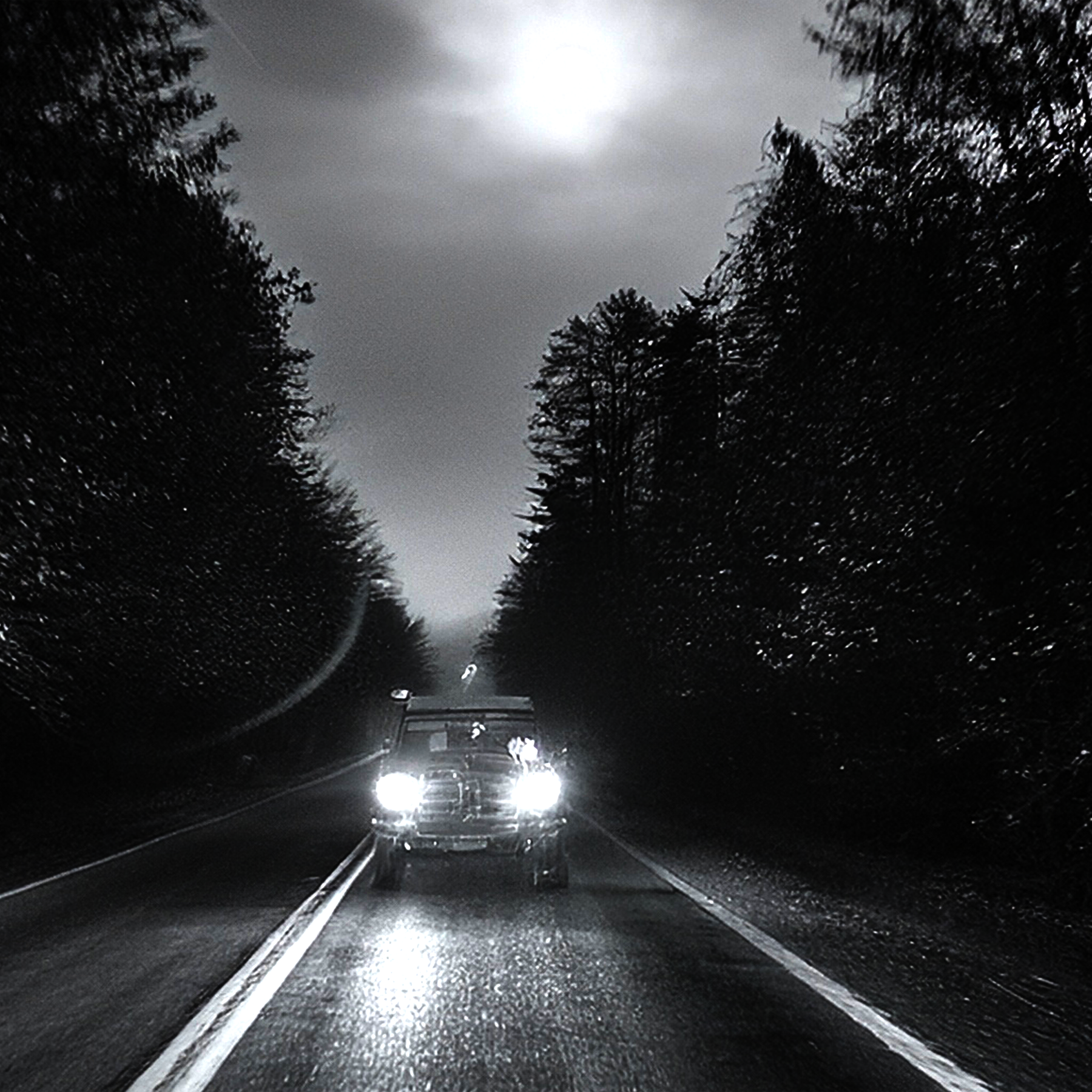
Since I was no longer gainfully employed, it was expected that I leave for home at once. I was fine with that, except that the absence of employment also meant the absence of income. I didn’t have the money to pay for a plane ticket, and there were no trains that could take me from St. Louis to nowhere. The thought of riding a bus for 16 hours when a car ride would take six, was also more than a little stomach churning. Unfortunately, that meant driving my 1977 International Scout II all the way home – in January – with a massive blizzard building out west that was threatening to dump a foot of snow all over the roads I’d be travelling.
I loved that old Scout. It was ugly as hell, and about as reliable as gas station sushi, but it was mine. I bought it second hand when I was 16 and newly licensed. It carried my belongings from Willard Springs to Saint Louis when I moved there out of high school. To be fair, I had to stop in Fort Madison, Iowa, for repairs. Then I got all the way to Hannibal, Missouri, before another mechanic was required. It didn’t help that I’d chosen to follow the river all the way down. It added extra miles and undue wear and tear on the old girl. Somehow, Scout and I made it, though. Of course, that was the middle of summer, and now, five years and a lot more miles later, I would be making the return trip in a possible snowstorm.
I got the phone call about Granddaddy Friday morning. The funeral was planned for Monday the first. My birthday. I didn’t argue or complain. If a man died on a Friday, he was buried on a Monday. Three days. That was the rule back then. The only option was to go home. With one bag of clothes and a small toiletry case, I headed north to Willard Springs.
It really is the middle of nowhere. It’s the kind of town where you grow up, but you don’t stay. Those who do stay either own farms, live off of food stamps and government rations, or serve. The serving options range from food to gasoline. I didn’t see myself as one of those people. My grades weren’t good enough to pursue a degree, but I wasn’t about to waste my life fighting off drunken advances at Dooley’s Corner Tap, handing out greasy plates of food at Fat Maddie’s Catfish Café, or stocking cigarettes behind the counter at Corner Gas. It’s the life I got anyway, albeit in a different location. I did accomplish one thing. After five years of night school, I had an associate degree. At that rate, I fully expected to have my bachelor a year or so before I retired.
It was midafternoon when I left for home. How I managed to arrive is beyond me. A 400-mile road trip with Scout was not my idea of pleasure. She grumbled, belched ugly black smoke, and hissed menacingly from under her hood the whole trip. Twice, I pulled over to eat just so she could have a rest. Each time I turned off the ignition, I was sure she would never start again, but I couldn’t make myself push the old girl any harder than was necessary. I paid her for her efforts with gasoline, motor oil, and antifreeze, all of which she had a gluttonous appetite for.
It must have been nearly ten o’clock when I pulled into the barnyard where I grew up. There was a light on in the kitchen, but the rest of the house was dark. I guessed that Mom and Dad left that light on for me. They would have been in bed two hours earlier. I didn’t mind. They were already old when they had me. I was a menopause baby. My older siblings were all grown, or nearly so when I came along. Old people tend to go to bed early and rise with the sun. Old farmers get up early, eat breakfast, feed the animals, milk, gather eggs, work on whichever piece of equipment happens to be broken at the moment, then, when the sun finally decides to get up, they shake their fists at it for being lazy, and start their day.
I turned off the engine, stuck my keys into my jeans pocket, patted the dashboard and thanked Scout for getting me there, grabbed my bags, and went inside. There was a note on the table from Mom telling me there was a plate of food in the fridge for me and that she and Dad would see me in the morning. I set the plate of meatloaf, potatoes, and creamed corn on the table and rooted around until I found a bottle of root beer. It was the first quiet moment I’d had since the phone rang that morning. Between figuring out how much money I could afford to spend, what clothes I needed to bring, and worrying about Scout’s ability to get me there, I hadn’t let myself think about my grandfather.
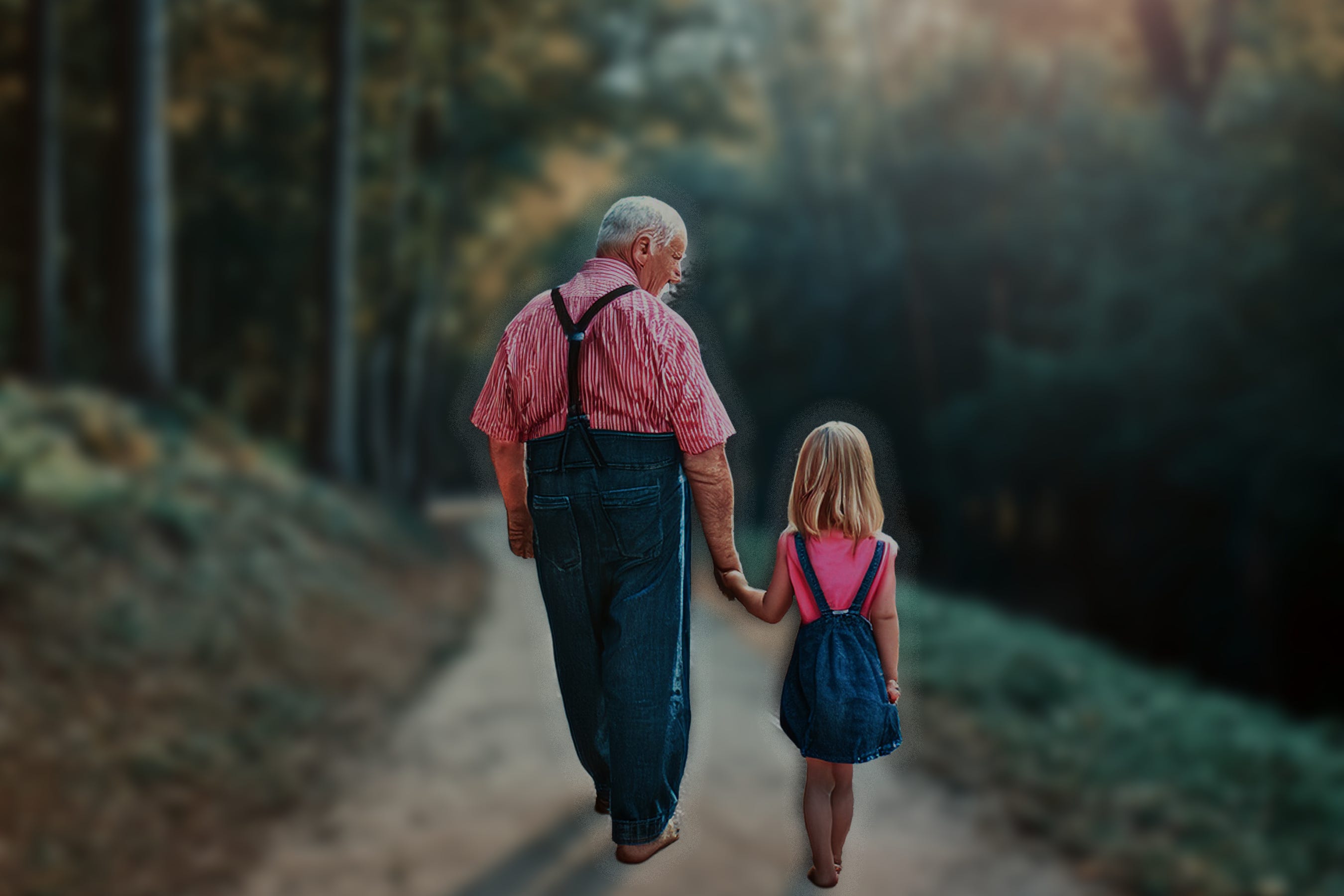
My mother’s father was the reason everyone called me Shadow. From the moment I was old enough to walk, where he went, I went. His house was across the wide gravel road from ours, so he walked over and had breakfast with us most mornings. When he left, unless I had to go to school, I went with him. And the adventures we had together was worth a lifetime of memories. We’d go down to the river to scout for good fishing spots. Or we’d wander around out in the woods checking for signs of deer and turkey. He bought me my first fishing pole and my first bb gun. He taught me to drive as soon as my legs were long enough to reach the pedals. Most farm kids learn that skill early, but it was my grandfather who taught me. He’d take me into town for coffee at Fat Maddie’s, or for a strawberry soda at the County Creamery. If he got up to leave and I didn’t immediately get up to follow, he’d turn and say, “come on, Shadow,” and the name stuck.
When I moved to St. Louis, he was the one I called every night. He always seemed to know when I needed money. Things would get tight, and I’d open my mailbox to find a check from Granddaddy with a note that read, “don’t tell your mama.” Over time, the conversations grew shorter, and the calls became less frequent. I settled into my life, and he got over not having a shadow to follow him around anymore. The last time we spoke was on his ninetieth birthday. That was in September. I’d sung happy birthday to him and asked if he got his card. He bragged about it being the best birthday card he ever got, like he always did. We talked about my latest bartending job, and he mentioned that Dooley’s was looking for a bartender if I ever wanted to move back home.
“Fish are bitin’,” he said in that slow country boy voice of his. “Ole Ted Cassidy isn’t quite the fishin’ partner you are.”
“I haven’t fished since I left home, Granddaddy,” I told him.
“Shame,” was his quiet reply.
With a sudden awkwardness I couldn’t quite explain, I quickly said, “well, I gotta get ready for work. It’s Saturday and the place’ll be busy tonight.” Then I told him I loved him, and he returned the sentiment.
I suppose knowing that the last words he heard me say were, “I love you, Granddaddy,” should have been a comfort. Instead, I was beating myself up for not calling him at Christmas. I blamed my ex for that. We were at that stage right before a breakup when every conversation is an argument. I should have recognized the signs of a man who had moved on, but I was naïve. A couple of weeks later when I discovered the real reason for all the fighting, I hated him. Now I hated him even more. Had I not been preoccupied with that relationship, I would have had one more conversation with Granddaddy.
I finished my supper and went up to my old room, crawled into bed, wiped my tears on my pillow, and fell asleep.
We spent the next two days making arrangements. As we ran around to the funeral home, the cemetery, and the florist shop, the house filled with well-meaning relatives, friends, and neighbors. The kitchen table overflowed with cakes and pies, and casseroles lined the counters. Mom was forced into a continuous repetition of how she had gone over to check on her father when he didn’t come over for breakfast that morning. She’d found him lying face down on the living room floor. His rifle was lying beside him. At first, she thought he’d killed himself, but there was no blood, nor any bullet holes. The coroner suggested that perhaps he’d taken his gun out to clean it and was returning it to the gun safe when his heart gave out. No one questioned that theory. After all, the man was 90 years old. He was taken to the morgue, and the gun was placed back inside the safe.
It was a nice funeral. Isn’t that what everyone says? He looked so natural. Another meaningless platitude. How on earth anyone could ever think a man lying flat on his back inside a velvet lined black metal case draped in roses and lilies could be in his element I will never know. He will be missed. That was one I couldn’t argue.
The dinner afterwards, like all funerals in our family, was filled with laughter and stories of a young Barton O’Conner, followed by more tales of the older man I knew. Again and again, people talked about the tall tales he used to invent. No one could spin a yarn quite like Barty. His sense of humor and wit were sharp and mildly self-deprecating. He loved a good laugh almost as much as he loved a good scare.
More than one local hunter confessed that his stories about the woods surrounding our farm kept them from wandering onto our property in search of the elusive trophy buck. Others agreed that Granddaddy had them all convinced that this land was haunted by demons and spirits or inhabited by monsters. Someone pointed out Granddaddy’s genius in keeping his hunting spot to himself.
It was the same with the river that meandered through the far western pasture on Granddaddy’s side of the road. We all fished his favorite spots with him at one time or another, but not one person could remember a time when they felt brave enough to wander out there alone. Again, it was a testament to Granddaddy’s genius.
By Monday night, I was emotionally and physically exhausted. Enough of our relatives had followed us home to prevent the possibility of finding a comfortable seat anywhere in the downstairs. I went up to bed, but the noise of more memories shared from half a dozen conversations below me permeated my room to the point that I gave up and wandered back down.

“Are you okay, Dear?” Mom asked me when she saw me slinking down the stairs. I nodded mutely. Correctly judging my lost expression, she came over and whispered into my ear, “If you really want to escape, and you’re not uncomfortable with the idea, your grandfather’s house is empty. You can go over there and have the whole place to yourself tonight.”
I must have given her a startled look because she quickly added, “Of course, if it bothers you…”
“No!” I said, a little louder than I meant to. “I think that’s exactly what I need.”
“Well, then,” she said with a smile, “why don’t you go up and grab your bag and slip down the back stairs and out the back door?” She didn’t have to tell me twice.
Nobody locked their doors back then, even if they were never coming home again. I stepped through the door, into the living room, and flipped on the overhead light. It smelled of cleaning solutions and burnt coffee grounds – a trick used to remove the offensive smell of death from an enclosed space. Mom, in her eternal frugality, had apparently reduced the heat inside the house to a mere 60 degrees. My first act was to rectify that fact because I was in no mood to build a fire in the Ben Franklin stove in the corner.
There was a dark stain on the rug that covered most of the floor that was suspiciously human shaped. I assumed that Mom, no matter how hard she’d tried, was unable to remove the last remaining evidence of Granddaddy’s occupation. I should have been repulsed. At the very least, it should have sent a chill down my spine. It didn’t.
I went over to the worn brown leather sofa and sat down. A second later, I laid my head down. “Good night, Granddaddy,” I said. Moments later, I was sleeping.
A long, baleful howl shattered my dreams and sent me into a bolt upright position. For a minute, I was confused by my surroundings. I wasn’t in my little St. Louis apartment. Nor was I in my big comfortable bed over my parents’ kitchen. The curtain moving gently in the flow of heat from the vent directly below it drew my attention, and I was instantly aware of my location. My eyes shot down to the blot on the carpet.
“What was that?” I asked the stain. I didn’t expect it to answer. If it had answered, I probably would have had another stain on the sofa to clean. But somehow, it felt comforting to know that Granddaddy, however ethereal, was there with me.
I was debating the possibility of looking out a window when another howl, this one closer and strangely menacing, echoed through the house. I haven’t been back home in years, so I can’t attest to the situation today, but back then, wolves were considered extinct in that part of the country. Yet, that was the closest creature I could think of that could howl like that. And if it was a wolf, it must have been a massive one.
I had just determined to walk over and look out the window when something hit the side of the house with enough force to shake the furniture. My next thought was to arm myself. Granddaddy’s gun safe was standing on the short piece of wall that framed the wide opening between the living room and the dining room. I jumped catlike from the sofa to the middle of the floor and again, ignoring the fact that I had landed on my grandfather, I made another long leap to the safe.
It was no surprise to find it open. Granddaddy never locked it, and whoever had replaced the rifle hadn’t bothered to do so, either. I grabbed the .243 Winchester and a hand full of bullets from the box on the shelf. To my shock, when I broke down the gun to load it, there was already a bullet inside. Never in my life had I known my grandfather to leave a bullet in the gun, safety or no safety. When he put a gun away, it was empty.
At the window, I gently slid the curtain aside so I could see out. The sky had paled enough to extinguish the dimmer stars, but not to the point of allowing detailed vision. The security light that stood between the house and barn helped a little, but it was old and didn’t give off as much light as I would have preferred. Something moved between the barn and the equipment shed. I was sure it was a person. No animal would walk on two legs. I wished it had been an animal.
For all their ferocity, animals don’t strike the kind of fear in my heart that people do. If it had been a wolf and I had shot it, I might have faced a fine, but not a murder charge. That gives the advantage to the criminal. I’d probably get off on self-defense, but only after an extensive investigation and a lot of undue press. If I was faced with the need to pull the trigger on a human being, no matter how much danger I felt myself to be in, I had better be damn certain it was worth knowing I’d taken a life, putting myself and my family through the inevitable circus, and possibly spending the rest of my life in prison.
These were the thoughts that drove me to the telephone. I picked it up and called my mom. Five minutes later, Dad was running across the road with his rifle ready to do battle. As soon as I saw him, I stepped out onto the porch. I was pointing toward the equipment shed when he reached the house. He turned and headed in that direction. I ignored his hand signal to stay where I was and jumped down off the porch to follow.